
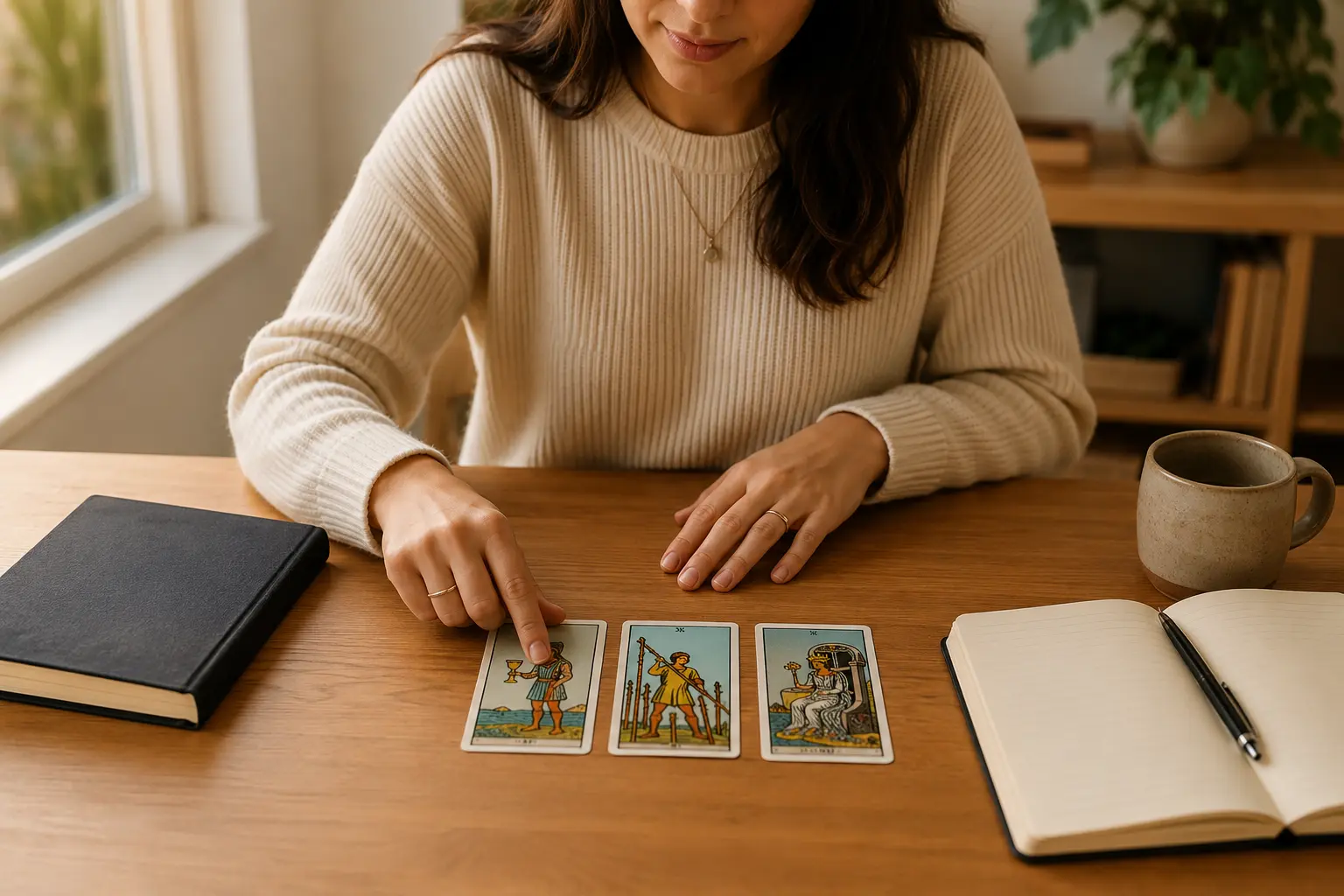
Tarot reading for beginners does not require psychic ability or years of memorisation. You can begin by learning the basic structure of a tarot deck, asking one clear question, drawing a small number of cards, and combining their traditional meanings with the details you notice in the artwork.
The goal is not to predict an unavoidable future. Tarot is more useful as a reflective tool: it can help you examine a situation, notice patterns, and consider choices from a fresh perspective. This guide explains how to complete your first reading in a calm, practical way.
Table of Contents
-
- What tarot reading is
- How a tarot deck is organised
- What you need to begin
- How to do your first tarot reading
- How to interpret tarot cards
- Beginner tarot spreads
- Common beginner mistakes
- How to practise responsibly
- Conclusion
What Is Tarot Reading?
Tarot reading is the practice of using a deck of illustrated cards to explore a question, feeling, or situation. Each card has traditional associations, but its meaning also depends on the question, its position in a spread, nearby cards, and the reader’s interpretation.
People use tarot for self-reflection, journaling, creative thinking, and spiritual practice. A reading may suggest themes or possibilities, but it cannot verify facts or guarantee an outcome. Important medical, legal, financial, or safety decisions should always rely on qualified advice and reliable evidence.
How a Tarot Deck Is Organised
A standard tarot deck contains 78 cards divided into the Major Arcana and Minor Arcana.
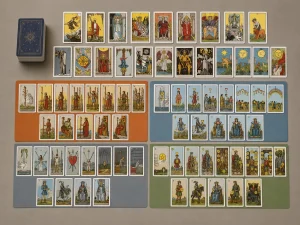
The Major Arcana
The 22 Major Arcana cards represent broad life themes, turning points, and lessons. They begin with The Fool and continue through cards such as The Magician, The Lovers, Death, The Sun, and The World.
Major Arcana cards often carry extra weight in a reading. For example, The Hermit may point to reflection or time alone, while The Chariot may suggest direction, discipline, and determined action. The Death card usually represents an ending or transformation rather than literal death.
The Minor Arcana
The 56 Minor Arcana cards deal more often with everyday experiences. They are divided into four suits:
-
-
- Wands: energy, ambition, creativity, and action
- Cups: feelings, relationships, intuition, and connection
- Swords: thoughts, communication, conflict, and decisions
- Pentacles: work, money, health, home, and practical matters
-
Each suit contains cards numbered Ace through Ten plus four court cards: Page, Knight, Queen, and King. Suit associations vary slightly between traditions and decks, so use the guidebook supplied with your deck when its system differs.
What You Need for Your First Reading
You only need a tarot deck and a place where you can focus for a few minutes. A notebook is helpful but optional.
Choose a deck with artwork you can understand and enjoy looking at. Many beginners start with a deck based on the Rider-Waite-Smith system because its scenes contain recognisable symbols and many learning resources use it. However, the best first deck is one you will actually use.
You do not need crystals, candles, special cloths, or a cleansing ritual. Such items can help create a thoughtful atmosphere, but they are personal additions rather than requirements.
How to Do a Tarot Reading for Beginners
Use this simple process for your first reading.
1. Choose a Clear Question
Open-ended questions usually produce more useful reflection than questions that demand a fixed prediction. Instead of asking, “Will I get the job?†try:
-
-
- “What should I understand about this job opportunity?â€
- “How can I prepare well for the interview?â€
- “What factor am I overlooking in my career decision?â€
-
Keep the question focused on your own choices when possible. Asking what another person secretly thinks can encourage guesswork about something only that person can confirm.
2. Settle and Focus
Sit comfortably, take a few slow breaths, and repeat the question silently or aloud. You do not need to empty your mind. Simply give the reading your attention and avoid drawing cards when you feel pressured to obtain a particular answer.
3. Shuffle the Cards
Shuffle in any comfortable way. You can mix the cards in your hands, divide the deck into piles, or spread them face down on a table and move them around gently. Stop when the cards feel sufficiently mixed. There is no universal required number of shuffles.
4. Draw One to Three Cards
Begin with one card for a daily prompt or three cards for a simple spread. Drawing many cards can make a first reading harder to interpret. Place the cards face up from left to right and note the position assigned to each one.
5. Observe Before Checking Meanings
Spend a moment looking at each image. Ask yourself:
-
-
- What is happening in the scene?
- What emotion does it create?
- Where is the figure looking or moving?
- Which symbol, colour, or detail stands out?
- How could the image relate to my question?
-
Write down your first impressions. Then check the deck’s guidebook and compare its traditional meaning with what you noticed.
6. Connect the Cards
Read the cards as parts of one message rather than isolated definitions. Notice repetition and contrast. Several Cups may emphasise emotion; several Swords may highlight thought or tension. A hopeful card beside a difficult card may suggest an available strength rather than cancelling the challenge.
7. End With a Practical Takeaway
Summarise the reading in one or two sentences, then choose a useful next step. A reading about work might lead you to update your résumé, clarify a goal, or have a direct conversation. This turns reflection into something grounded and constructive.
How to Interpret Tarot Cards Without Memorising Everything
You do not need to memorise all 78 tarot cards before you begin. Use three layers of interpretation:
-
-
-
- The card’s traditional theme. Start with a short guidebook definition.
- The visual details. Consider the figures, setting, movement, and mood.
- The reading context. Relate the card to the question and its spread position.
-
-
Imagine that the Eight of Pentacles appears in the “helpful action†position during a career reading. Its traditional themes include practice, concentration, and developing a skill. The image often shows someone repeating careful work. In context, it may suggest improving a specific skill or giving patient attention to the quality of your work.
This interpretation is more useful than simply declaring that the card means “work.†It explains what part of the image matters and connects that theme to an action.
Should Beginners Read Reversed Cards?
A reversed card is one that appears upside down. Some readers interpret reversals as blocked, internal, delayed, weakened, or contrasting expressions of the upright meaning.
Beginners may include reversals, but they do not have to. Reading every card upright at first reduces complexity and helps you build confidence with the core meanings. If you use reversals, choose one consistent method and record it in your journal.
Three Easy Tarot Spreads for Beginners
One-Card Reflection
Ask, “What should I pay attention to today?†Draw one card and write down one observation and one possible action. Treat the card as a prompt, not a command.
Situation, Challenge, Advice
Draw three cards from left to right:
-
-
-
- Situation: the main energy or theme
- Challenge: an obstacle, tension, or blind spot
- Advice: a constructive way to respond
-
-
This spread is flexible because it examines the present situation without claiming that the future is fixed.
Option A, Option B, What Matters
Use this spread when comparing two choices:
-
-
-
- Option A: an important consideration connected with the first choice
- Option B: an important consideration connected with the second choice
- What matters: the value or priority that deserves attention
-
-
The cards should support your decision process, not replace research, honest discussion, or professional advice.
A Short Example Reading
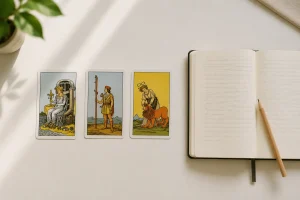
Suppose a beginner asks, “How can I approach a new creative project?†and draws the Page of Wands, Eight of Pentacles, and Two of Swords in a situation-challenge-advice spread.
-
-
-
-
- The Page of Wands may describe curiosity and enthusiasm at the beginning of the project.
- The Eight of Pentacles in the challenge position may show that excitement must be supported by patient practice.
- The Two of Swords as advice may suggest defining the decision that is causing hesitation and gathering enough information to choose.
-
-
-
A balanced summary might be: “The idea has genuine energy, but progress depends on regular practice and a decision about direction.†A practical next step would be to select one version of the project and schedule a short work session.
Common Beginner Mistakes
Drawing More Cards Until You Like the Answer
Repeatedly asking the same question can make a reading confusing. Record the first spread, reflect on it, and allow time before returning to the topic.
Treating Guidebook Meanings as Rigid Rules
Guidebooks are learning tools, not scripts. A card’s role changes with the question and position. Explain why a meaning fits instead of selecting the most dramatic definition.
Asking Vague or Predictive Questions
“What will happen to me?†is too broad to guide a focused interpretation. Ask about one situation and look for insight or an actionable response.
Assuming Difficult Cards Predict Disaster
Cards such as Death, The Tower, and Ten of Swords can feel alarming. They often symbolise endings, disruption, or mental strain. Consider the full spread and avoid turning symbolic material into frightening certainty.
Reading When Highly Distressed
If a reading increases fear or compulsive checking, pause. Speak with someone you trust or seek appropriate professional support. Tarot should not be used to assess emergencies or replace mental-health care.
How to Improve Your Tarot Reading Skills
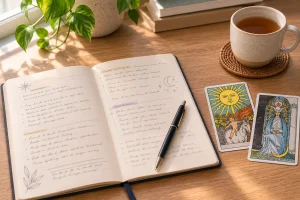
Keep a simple tarot journal with the date, question, cards, first impressions, guidebook notes, and takeaway. Review older entries to see how your interpretations develop. Do not judge accuracy only by whether an event “came true.†Also ask whether the reading helped you think clearly or act responsibly.
Study one card at a time, compare similar cards, and practise short readings. Over time, repeated symbols and number patterns will become familiar. Consistency is more valuable than trying to learn every possible meaning at once.
If you want a quick prompt after learning this process, try the Yes/No Tarot tool. Use its result as a starting point for reflection rather than a guarantee, especially when a decision has serious consequences.
FAQ
Can anyone learn to read tarot cards?
Yes. Tarot reading is a learnable practice involving symbols, patterns, questions, and interpretation. You do not need to identify as psychic. Begin with one-card readings, use your deck’s guidebook, and keep notes. Confidence usually grows through regular, thoughtful practice rather than trying to memorise every card immediately.
Do I need to cleanse a new tarot deck?
No. Cleansing is an optional personal or spiritual ritual, not a requirement for using tarot cards. Some people knock on the deck, place it in moonlight, use smoke, or simply shuffle it. Choose a safe method that feels meaningful to you, or begin reading without a ritual.
How many cards should a beginner draw?
One to three cards is usually enough. A one-card draw helps you study a single image, while a three-card spread shows how meanings interact. Larger spreads add more relationships and can become overwhelming. Expand only when you can explain the purpose of every position in the spread.
Is it okay to read tarot for yourself?
Yes, but personal hopes and fears can influence interpretation. Write your question before drawing, record the first spread, and avoid repeatedly pulling cards for reassurance. For high-stakes choices, combine reflection with reliable information and advice from an appropriately qualified person.
Are reversed tarot cards necessary?
No. Many capable readers work only with upright cards. Reversals add another interpretive layer, but beginners may find it easier to learn core upright meanings first. If you later introduce reversed cards, decide how you will interpret them and apply that approach consistently.
Conclusion
Tarot reading for beginners is easiest when you keep the process simple: ask a clear question, draw one to three cards, observe the images, consult traditional meanings, and finish with a practical takeaway. You can begin without special rituals or complete knowledge of all 78 cards.
Approach each reading with curiosity and healthy limits. Tarot can help you explore possibilities and organise your thoughts, but your judgment, evidence, and real-world actions still matter most.