
To learn how to shuffle tarot cards, start with the method that feels comfortable in your hands. You can use an overhand shuffle, divide the deck into piles, mix cards on a table, use a gentle riffle, or combine several methods. There is no required technique or exact number of shuffles.
The purpose is simply to mix the cards while focusing on your question. Because tarot decks are often larger than standard playing cards, a slow and gentle method is usually best for beginners and helps protect the card edges.
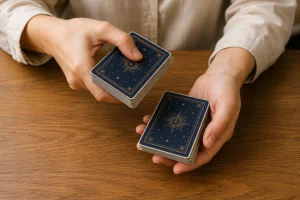
Table of Contents
-
- Before you shuffle
- Five ways to shuffle tarot cards
- How long to shuffle
- Cutting and drawing the cards
- Reversed cards
- Cleaning and cleansing a tarot deck
- Common problems
- Conclusion
Before You Shuffle a Tarot Deck
Wash and dry your hands, clear enough table space, and remove food or drinks that could damage the cards. If your deck is new, look through every card first. This confirms that the deck is complete and helps you become familiar with its artwork.
Decide whether you want reversed cards—cards that appear upside down—in your readings. If you want all cards upright, keep the top and bottom of the deck facing the same direction as you shuffle. If you want reversals, rotate some piles by 180 degrees before recombining them.
Take a breath and state your question. This small pause can serve as a tarot ritual if you enjoy having one. Candles, crystals, incense, and spoken phrases are optional, not rules.
How to Shuffle Tarot Cards: Five Methods

1. Overhand Shuffle
Hold the deck in your non-dominant hand. With your other hand, lift small groups of cards from the top and let them fall into your opposite palm. Repeat until the deck is mixed.
The overhand shuffle is quiet, controlled, and easy on most cards. If the deck feels too large, divide it into two smaller sections, shuffle each one, and combine them.
2. Pile Shuffle
Deal cards one at a time into three to seven face-down piles. Place the next card on the next pile and continue until the deck is distributed. Stack the piles in a new order, then repeat or finish with an overhand shuffle.
This method is helpful for large or stiff cards because it requires little grip strength. Dealing alone follows a predictable pattern, however, so vary the number and order of piles or combine it with another method for a less ordered mix.
3. Table or Shuffle
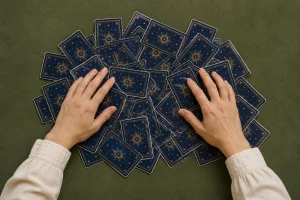
Place the cards face down on a clean table. Move them around with both hands in broad, gentle circles until their positions and directions are mixed. Gather them into one deck when you are ready.
This is one of the easiest ways to introduce reversed cards naturally. Use a smooth, clean surface and avoid pressing hard. A reading cloth can prevent scratches and make the cards easier to collect.
4. Gentle Riffle Shuffle
Divide the deck into two roughly equal halves. Hold one half in each hand and allow the inner corners to interleave gradually. Push the halves together without sharply bending them.
Riffle shuffling mixes cards efficiently but may crease delicate stock or damage gilded edges. Skip it if the deck is expensive, oversized, or difficult to hold. You never need to bridge the cards as people often do with playing cards.
5. Packet or Hindu-Style Shuffle
Hold the deck horizontally in one hand. Use the other hand to pull small packets from the top and let them collect in your palm. Continue until all cards have moved, then repeat.
This method provides control and can feel easier than an overhand shuffle for some hand sizes. Move slowly at first so loose cards do not fall.
How Many Times Should You Shuffle Tarot Cards?
There is no correct number. Shuffle until the cards are reasonably mixed and you feel ready to draw. That may take less than a minute for a daily card or longer when returning a spread to the deck.
Some readers use a meaningful number, such as three or seven shuffles. That is a personal ritual, not something required for an accurate reading. Comfort, attention, and care for the deck matter more than counting.
Should You Cut the Deck?
Cutting means dividing the shuffled deck into two or more piles and recombining them. It is optional. You might cut once, make three piles, or invite the person receiving the reading to cut the deck.
Choose a simple routine you can repeat. For example: shuffle, cut into three piles with your non-dominant hand, then reassemble the piles in any order. The routine helps mark the transition into a reading, but it does not make one result more valid than another.
How to Draw the Cards
After shuffling, you can draw from the top or fan the cards face down and choose from different positions. Both approaches are acceptable. Drawing “jumpersâ€â€”cards that fall from the deck while shuffling—is also optional. Keep a jumper only if doing so is part of your established method; accidental drops do not have to become part of the spread.
Try not to redraw merely because you dislike a card. Record the spread and consider its full context. If the question was unclear, reformulate it before beginning a genuinely new reading.
How to Shuffle Without Reversed Cards
Keep every card facing the same direction and avoid rotating either half of the deck. Overhand and packet shuffles make orientation easy to control. If a card still appears reversed, turn it upright before interpreting it.
If you deliberately use reversals, the table shuffle is the easiest way to mix orientations. Alternatively, rotate one section of the deck before an overhand shuffle. Neither system is better; consistency makes readings easier to learn and review.
How to Clean a Tarot Deck
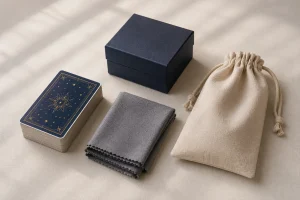
Physical cleaning and spiritual cleansing are different. To clean a tarot deck, follow the manufacturer’s care instructions. In general:
-
-
- Use clean, dry hands.
- Wipe laminated cards very lightly with a soft, dry microfibre cloth.
- Avoid water, oils, alcohol, and household cleaners unless the manufacturer explicitly approves them.
- Store cards dry and away from direct sunlight, humidity, pets, and food.
- Use the original box, a deck pouch, or a rigid container to protect the edges.
-
If a card gets wet, blot it gently and allow it to air-dry flat. Do not use high heat. Valuable or speciality decks may need advice from their publisher or a paper-conservation professional.
Optional Ways to Cleanse a Tarot Deck
Some readers spiritually cleanse a deck when it is new, after another person handles it, or when beginning a new reading cycle. This is a personal practice rather than a physical necessity. Common methods include:
-
-
- placing the cards in order and reshuffling them
- knocking gently on the closed deck
- leaving the deck in a safe place overnight
- using visualisation, prayer, or a spoken intention
- placing the deck near a crystal without rubbing it against the cards
-
Be careful with smoke, sunlight, moonlight, salt, water, and essential oils. Smoke can leave residue, sunlight can fade ink, outdoor moisture can warp paper, and salt or oils can scratch or stain cards. A quiet intention is enough if you want a safe, simple tarot ritual.
Common Shuffling Problems
The Deck Is Too Large for My Hands
Divide it into smaller sections or use a pile or table shuffle. You can also rest the lower edge on the table during an overhand shuffle.
The Cards Stick Together
New glossy cards may loosen with gentle use. Separate small groups by hand instead of forcing them. Make sure your hands and the room are dry.
Cards Keep Falling
Slow down, hold smaller packets, and shuffle over a table or cloth. Dropped cards do not automatically carry a special message.
I Have Limited Hand Mobility
Spread the cards face down on a table and move them gently, or ask a trusted person to mix them. An accessible method is fully valid; no particular hand movement is spiritually required.
Once your cards are mixed, you can practise with the Yes/No Tarot tool or use a one-card reflection. Treat any result as a prompt for thought rather than a guaranteed answer.
FAQ
Is there a wrong way to shuffle tarot cards?
There is no spiritually wrong method. A technique is unsuitable only if it damages the deck, causes pain, or does not mix the cards well enough for your purpose. Choose overhand, pile, table, riffle, or packet shuffling according to your deck and physical comfort.
Can someone else shuffle my tarot cards?
Yes. Some readers invite the person receiving the reading to shuffle or cut the deck, while others prefer to handle their own cards. Either practice is acceptable. Set a clear boundary if the cards are fragile, valuable, or personally significant to you.
What should I do when a card falls out while shuffling?
You may return it to the deck or treat it as a jumper if that is part of your chosen method. A falling card can simply result from loose handling. Decide your rule before the reading and apply it consistently instead of assigning every accident a dramatic meaning.
Do I need to cleanse my tarot deck after every reading?
No. Spiritual cleansing is optional, and physical cleaning is only needed when the cards become dusty or marked. Many readers simply gather the cards, shuffle, and store them safely. If a short cleansing practice helps you reset your attention, use one that cannot damage the deck.
How do I shuffle tarot cards for reversed meanings?
Use a table shuffle so some cards rotate naturally, or divide the deck and turn one section 180 degrees before recombining it. If you do not want reversals, keep every card facing the same direction. Both approaches are valid when used consistently.
Conclusion
The best answer to how to shuffle tarot cards is to use a method that mixes the deck without straining your hands or damaging the cards. Overhand, pile, table, gentle riffle, and packet shuffles all work. You can cut the deck, use a tarot ritual, or include reversed cards, but each choice is optional.
Start slowly, protect the card stock, and choose a consistent routine. The quality of a reading depends more on a clear question and thoughtful interpretation than on performing a perfect shuffle.